Saint Bernard Dog Silhouette
A Designer’s First Glance: Bold, Warm, and Instantly Recognizable
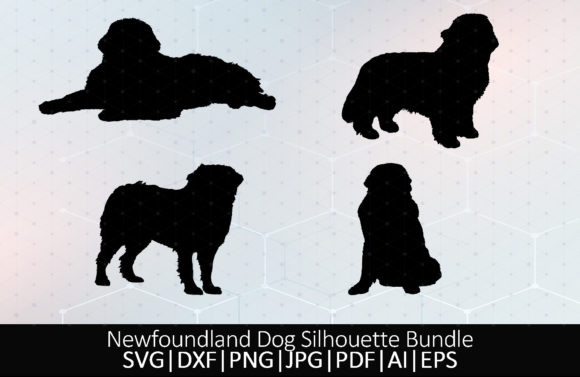
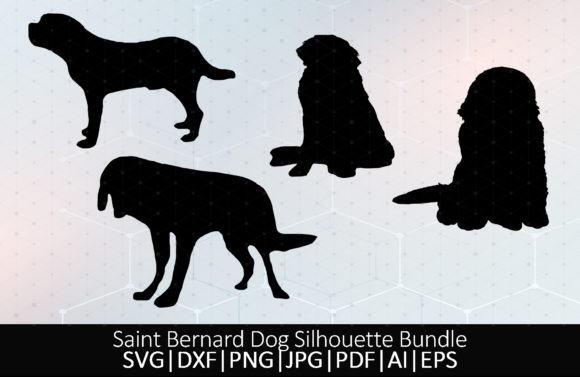
When I opened the Saint Bernard Dog Silhouette bundle, what struck me first wasn’t technical precision—it was mood. This isn’t a fussy, hyper-detailed illustration. It’s a clean, confident outline that captures the gentle mass and noble head tilt of the breed without clutter. The silhouette leans slightly forward, suggesting quiet presence—not aggression, not playfulness, but calm loyalty. That subtle posture makes it ideal for handmade products where emotional resonance matters: baby onesies, nursery wall hangings, or embroidered kitchen towels gifted to a new pet parent.
Real-World Test: Embroidering a Linen Tote for a Local Pet Rescue Shop
Last week, I used the Saint Bernard Dog Silhouette on a natural linen tote bag—intended as a thank-you gift for volunteers at a Saint Bernard rescue. I chose a medium-weight cutaway stabilizer and 40-weight rayon thread in deep charcoal. The result? Crisp edges, no puckering, and a finished product that looked intentionally designed—not digitally dropped in. Customers paused at the booth to ask, “Is that *your* dog?” That’s the power of a well-balanced silhouette: it invites connection, not just recognition.
Where It Shines (and Where It Needs Thought)
The Saint Bernard Dog Silhouette excels in applications where simplicity reads clearly from a distance or at small scale:
- Embroidered patches — Its bold contour holds up beautifully when heat-applied to denim jackets or backpacks.
- Sweatshirt embroidery — On midweight fleece, the shape anchors the chest area without overwhelming the garment.
- Baby embroidery — On organic cotton onesies, the smooth lines avoid scratchy stitch clusters—critical for sensitive skin.
- Holiday embroidery — Paired with a simple “Merry & Bright” script, it adds warmth to Christmas stockings or felt ornaments.
- Tote bag design — Centered on canvas, it reads cleanly even after repeated washing and folding.
But—and this is where experience kicks in—don’t assume it’s universally forgiving. On stretchy fabric like jersey knit tees, you’ll need excellent stabilization and possibly reduced stitch density to prevent distortion. On dark fabric, test thread contrast early: a light gray satin stitch can disappear unless you use bright white or metallic thread. And on curved surfaces like caps, the lower jaw and ear contours may require minor digitizing tweaks for optimal hoop alignment—especially if your machine has a tight throat space.
What It Adds to Your Craft Business (Beyond Just “Cute”)
As an Etsy seller and small shop owner, I judge designs not just by how they stitch—but by how they land with buyers. The Saint Bernard Dog Silhouette elevates perceived value because it feels intentional, not generic. It signals care—like the maker understood the breed’s character, not just its shape. That builds trust. When customers see this on a personalized gift (say, a pillow cover monogrammed with their dog’s name), they don’t think “clip art.” They think “this was chosen *for us*.”
For boutique branding, it pairs seamlessly with neutral palettes—cream, slate, oat—making it easy to maintain brand consistency across mugs, tea towels, and aprons. And because it’s a silhouette—not a cartoon or photorealistic render—it avoids age or trend limitations. A customer buying it today for a baby shower will still recognize its warmth ten years from now.
Practical Notes Every Embroidery Designer Should Run Through
Before stitching your first Saint Bernard Dog Silhouette project, here’s my checklist—refined over hundreds of client jobs:
- Test on scrap fabric first — Especially if using textured weaves (like burlap or terry cloth) where fill stitch can snag.
- Check thread color contrast — Run a black-and-white mockup alongside your intended background fabric swatch.
- Review stitch density — High-density fills may overwhelm lightweight fabrics; consider switching to running stitch outlines for delicate items.
- Confirm hoop size compatibility — Does the full silhouette fit comfortably within your most-used hoop? If not, plan for re-hooping or simplifying corners.
- Inspect small details — Even silhouettes have nuance—the curve of the ear, the set of the tail. Zoom in. Does the vector path translate cleanly to stitch commands?
- Use proper stabilizer — Cutaway for knits, tear-away for stable wovens, fusible for layered applique projects.
- Verify licensing — Since this is a Graphics asset marketed for commercial use, confirm whether resale of finished embroidered items or digital redistribution is permitted. When in doubt, contact the creator.
Final Thought: A Design That Serves the Maker *and* the Meaning
This isn’t just another dog SVG. The Saint Bernard Dog Silhouette works because it respects both craft and context. It doesn’t shout. It stands. Whether you’re embroidering a one-of-a-kind holiday gift or stocking 50 tote bags for a craft fair, it delivers clarity without compromise. It fits naturally into Crafts workflows—not as filler, but as foundation. And for anyone building a handmade brand around authenticity, warmth, or personal storytelling? It’s a quiet, steady asset—one that stitches true, sells well, and stays meaningful long after the hoop comes off.