Yorkshire Terrier Dog Silhouette
A Designer’s First Look: Clean, Confident, and Instantly Recognizable
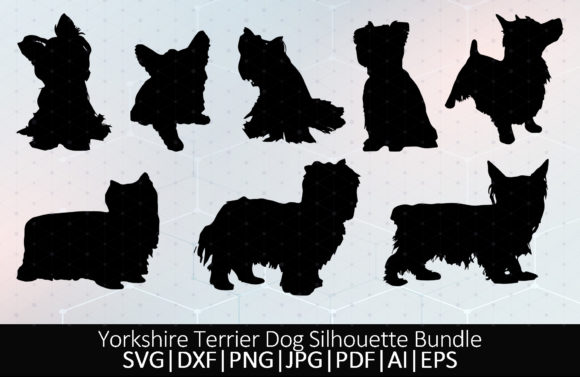
When I opened the Yorkshire Terrier Dog Silhouette bundle, my first thought wasn’t “cute” — it was “usable.” As someone who’s stitched hundreds of pet-themed designs for Etsy sellers, boutique baby lines, and custom apparel shops, I’ve seen too many silhouettes that collapse into a muddy blob under thread. This one holds its shape. The outline is smooth but not overly rigid — there’s just enough curve in the chest, lift in the tail, and taper in the muzzle to read as a Yorkie at a glance, even at 2.5 inches tall. It doesn’t try to be photorealistic, and that’s its strength. It’s a design built for clarity, not clutter.
Where It Shines: Real Projects, Real Clients
Last week, I used the Yorkshire Terrier Dog Silhouette to embroider a set of linen tea towels for a local dog-themed gift shop. We placed it centered on the lower right corner — 3.2 inches wide — with a simple satin-stitched border. The result? Crisp, balanced, and quietly confident. Customers kept picking up the towel, turning it over, and saying, “That’s *exactly* how my Yorkie stands.” That kind of instant recognition is gold for handmade product appeal.
It works especially well for:
- Custom apparel: Sweatshirt embroidery on midweight cotton fleece — no puckering, no distortion. The silhouette’s clean lines let the fabric breathe while still holding visual weight.
- Embroidered patches: Stitched onto twill backing, then heat-applied to denim jackets or tote bags. The minimal interior detail means low stitch density, which translates to faster production and less stabilizer bulk.
- Baby embroidery: On organic cotton onesies and burp cloths. Because there are no tiny ears or whiskers to vanish in fill stitch, the design stays legible even after multiple washes.
- Holiday embroidery: Think velvet stockings or embroidered ornaments. Paired with metallic thread, the silhouette reads as elegant rather than cutesy — perfect for high-end pet lovers.
Where to Pause — Not Every Surface Is Equal
This isn’t a one-size-fits-all embroidery file. Its simplicity is an asset — until you push it into situations where context matters more than clarity. For example:
- Stretchy fabric: On ribbed knit t-shirts or baby bodysuits, use cutaway + tear-away stabilizer combo. The design’s long vertical lines can pull if tension isn’t dialed in — test on scrap first.
- Curved surfaces: Caps or curved pillow covers require careful hooping. The silhouette’s clean profile helps, but avoid placing it too close to the bill seam or gusset — those areas distort easily.
- Textured fabrics: Heavy linen or burlap will mute fine edge definition. If you’re stitching on rustic kitchen towels or aprons, consider adding a single running stitch outline to reinforce the shape.
- Dark or dense backgrounds: On black sweatshirts or navy canvas totes, use bright white or silver thread — not ecru. The contrast makes all the difference in perceived sharpness.
What It Does for Your Craft Business — Beyond the Stitch
As an Etsy seller or small shop owner, your customers don’t just buy a dog; they buy sentiment, identity, and trust. The Yorkshire Terrier Dog Silhouette supports that. It looks professional without feeling corporate — ideal for handmade presentation. When paired with thoughtful typography (a subtle script name below, for instance), it becomes a cohesive brand element across tote bags, pillow covers, and holiday gifts.
I’ve watched buyers linger longer on listings using this silhouette in mockups — especially when shown on both light and dark fabric backgrounds. Why? Because it scales cleanly, reads clearly, and feels intentional. That builds buyer confidence far more than flashy embellishments ever could.
Practical Embroidery Designer Notes — Before You Hoop
Before committing to a full run, here’s what I always do with the Yorkshire Terrier Dog Silhouette:
- Test on scrap fabric — same weight and weave as your final product. Watch how the satin stitch wraps corners and how fill areas settle.
- Check thread color contrast — view it in grayscale mockups. If it disappears in black-and-white, it’ll struggle on busy fabric prints.
- Review stitch density — this is likely a low-to-moderate density design (ideal for lightweight items), but verify before stitching on delicate baby clothes.
- Confirm hoop size compatibility — if you’re working with smaller hoops (4x4”), check whether the largest version fits comfortably with ¼” margin.
- Inspect small details — though minimal, look for any stray anchor points or overlapping vectors that might cause jump stitches.
- Use proper stabilizer — medium-weight cutaway for stable fabrics, soft tear-away for knits. Skip the mesh — it won’t support the clean edge you want.
- Verify licensing — since this is a Graphics bundle marketed for Crafts, confirm whether commercial use (e.g., selling finished embroidered totes) is permitted. When in doubt, contact the creator.
Final Thought: A Reliable Tool, Not a Trend
The Yorkshire Terrier Dog Silhouette won’t go viral on social media — and it shouldn’t. It’s not meant to dazzle. It’s meant to deliver: consistent results, quiet charm, and real-world versatility across embroidered patches, sweatshirt embroidery, baby embroidery, and boutique merchandise. It’s the kind of design you keep in your “go-to” folder — not because it’s flashy, but because it works, every time. For craft business owners, Etsy sellers, and makers building a recognizable handmade product line, that reliability is worth more than novelty. Use it thoughtfully, test it honestly, and let the silhouette speak for itself.