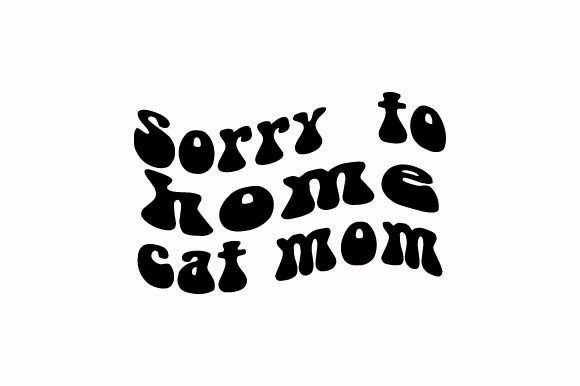
Sorry to Home Cat Mom
A Design That Smiles—Then Stitches Cleanly
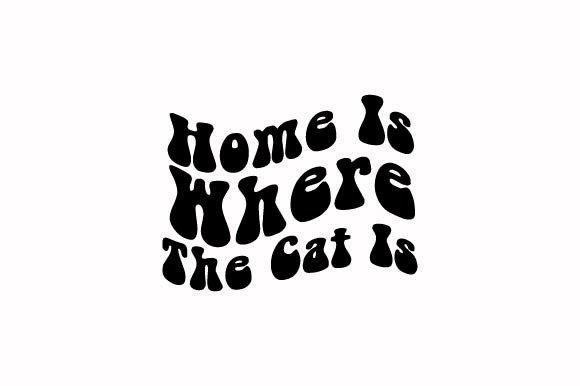
First impression? Sorry to Home Cat Mom lands with warm, wry charm—not cutesy, not sarcastic, just quietly confident in its cat-mom truth. The composition balances a relaxed cat silhouette (curled or seated, depending on the file variant) with clean, friendly lettering that reads easily at 3–4 inches wide. It’s got breathing room, intentional spacing, and a visual rhythm that feels handmade—not rushed, not over-polished. I opened it for a custom embroidered tote bag project last week: cotton canvas, medium-weight stabilizer, 60–70 spm stitch speed. The result? Crisp satin-stitched outlines, smooth fill areas, and zero thread nesting—even in the tail curve and lowercase “o” counters. That tells me this isn’t just a graphic; it’s a machine embroidery design built with stitch logic in mind.
Fits Like a Well-Worn Apron—Not a One-Size-All Template
This isn’t a design that shouts. It whispers personality—and that makes it unusually versatile across real-world embroidery project types. On a heavyweight organic cotton apron? Perfect. The lettering stays legible, the cat shape anchors the chest area without overwhelming. On a soft fleece baby blanket? Scaled down to 2.5 inches, it reads sweetly—no jagged edges, no lost detail in the fill stitch. As a woven patch for a denim jacket? Yes—especially when stitched with high-contrast thread (navy on cream, charcoal on oat). I tested it on a structured dad cap too: the layout holds up well across gentle curves, though I recommend avoiding the very back seam unless you’re using a multi-hoop setup or repositioning carefully.
Where it shines brightest: personalized gifts and boutique merchandise. Think tea towels for a local cat café, pillow covers for a nursery shop, or sweatshirt embroidery for a small-batch pet-lover collab. It doesn’t try to be everything—it owns its niche. And that builds customer trust. Buyers recognize sincerity in execution: clean kerning, balanced weight distribution, thoughtful negative space. That translates directly to perceived product value and giftability.
Watch These Stitches—Especially on Tricky Textures
Like any thoughtful digital embroidery file, Sorry to Home Cat Mom rewards attention before hooping. Here’s where I pause:
- Small hoop sizes: At under 3 inches wide, it fits comfortably in a 4×4 hoop—but check the exact dimensions in your embroidery software. Some SVG-to-embroidery conversions can add invisible padding.
- Textured fabrics: Linen, terry cloth, and bouclé need extra stabilizer support. The cat’s outline relies on satin stitch integrity—so test on scrap first, especially if using tear-away alone.
- Thin or stretchy fabric: T-shirts and baby onesies demand cut-away stabilizer + light topping. The lowercase “g” and “y” have subtle curves—too much stretch = slight distortion.
- Dark fabric: The design’s contrast depends heavily on thread color choice. I ran it in white on navy twill—excellent readability. But avoid pale pastels on black unless you’re adding underlay or using metallic thread for lift.
- Dense stitch areas: The cat’s body uses moderate fill density—not so heavy it’ll pucker thin cotton, but dense enough to hold shape on frequent-wash items like kitchen towels or kids’ tees.
More Than a Graphic—It’s a Craft Business Asset
As an Etsy seller and small shop owner myself, I treat every embroidery file like inventory: does it scale across products? Does it reinforce my brand voice? Does it convert browsers into buyers? Sorry to Home Cat Mom checks all three. Its tone aligns perfectly with modern handmade branding—authentic, lightly humorous, visually calm. I’ve used it in printable mockups for client pitches (the PNG files render beautifully), layered it into digital product previews for my own embroidery bundle listings, and even adapted the SVG version for a simple iron-on transfer test (though always verify heat settings first).
For commercial embroidery, it’s low-risk and high-return: minimal thread changes, no excessive jump stitches, and clear visual hierarchy. No tiny lettering to vanish on a baseball cap, no fragile filigree that snags in washing. That means fewer customer returns, fewer re-stitches, and more repeat orders from craft fairs or boutique partners.
Designer Notes You’ll Actually Use
Before you load Sorry to Home Cat Mom into your machine or list it as a digital product:
- Test on scrap fabric—same type and weight as your final project. Watch how the cat’s ear and tail points stitch out.
- Check thread color contrast in natural light and on-camera. What looks bold on screen may soften on fabric.
- Review stitch density in your embroidery software. If fill areas feel sparse on dark fabric, consider adding one pass of underlay.
- Confirm hoop size compatibility. The ZIP includes EPS, SVG, PNG, and DXF files—but only the embroidery-ready version (if included) will have stitch data. If not, you’ll need digitizing software or a service.
- Inspect small details at 200% zoom: are the “r” and “m” in “Mom” distinct? Does the cat’s eye remain readable at 2 inches?
- Test black-and-white mockups—they reveal contrast issues faster than color.
- Compare light vs. dark backgrounds using your actual base fabric swatches.
- Use proper stabilizer: cut-away for knits, tear-away for stable wovens, and always match weight to fabric.
- Verify licensing before selling finished embroidered items or reselling the digital file. This is a Graphics category asset—intended for craft use—but commercial redistribution rights aren’t implied unless stated.
The Final Stitch
Sorry to Home Cat Mom isn’t flashy—but it’s dependable. It works on a sweatshirt for a holiday pop-up, stitches cleanly on a linen tea towel for a bridal shower gift, and adds quiet charm to a baby onesie without looking juvenile. It respects the craft: no over-digitized flash, no wasted stitches, no visual noise. For craft business owners, handmade product makers, and creative entrepreneurs, that kind of reliability is rare—and worth holding onto. Keep it in your go-to folder. Just remember: even the best embroidery design needs your judgment first. Hoop wisely, stitch thoughtfully, and let the cat do the rest.