I Can’t Have Kids My Cat Is Allergic
As a designer who’s stitched over 300 custom embroidery projects—from boutique baby onesies to Etsy best-selling tote bags—I opened I Can’t Have Kids My Cat Is Allergic expecting wit, not whimsy. What I found was a tightly composed, conversation-starting machine embroidery design that lands somewhere between dry humor and heartfelt honesty—exactly the kind of tone that resonates with modern craft buyers.
My real-world test? A limited-run batch of organic cotton sweatshirts for a local pet-friendly café’s “No Kids, Just Cats” staff appreciation day. The design needed to stitch cleanly on midweight fleece, read clearly at 4.5 inches wide, and hold up through repeated washes without fraying or puckering. I Can’t Have Kids My Cat Is Allergic delivered—but only because I treated it like a thoughtful collaborator, not just a download.
First Impression: Sharp, Sassy, and Stitch-Ready
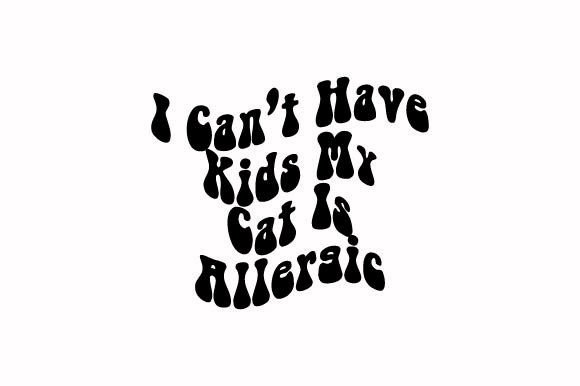
The layout is deceptively simple: bold, slightly rounded sans-serif lettering paired with two minimalist animal silhouettes—one cat (front-facing, tail curled), one dog (sitting, head tilted). No gradients, no drop shadows, no unnecessary flourishes. That restraint is its strength. As a machine embroidery design, it avoids common pitfalls: no overlapping elements, no micro-details smaller than 1.5mm, and consistent stroke weight across all letters and outlines. It feels intentional—not rushed, not overdesigned.
This isn’t a nursery decor piece pretending to be sweet. It’s a confident, tongue-in-cheek statement. That makes it ideal for embroidered patches, aprons for vet techs, pillow covers for cat cafés, or holiday gifts for friends navigating fertility journeys with grace and gallows humor.
Where It Shines (and Where It Needs Guardrails)
I Can’t Have Kids My Cat Is Allergic performs exceptionally well on stable, medium-weight fabrics: canvas tote bags, brushed cotton tea towels, structured denim jackets, and unlined sweatshirt fronts. On those surfaces, the satin-stitched outlines pop, the fill stitches stay smooth, and the negative space between letters breathes—no crowding, no bleeding.
It also works beautifully as an applique design when paired with contrasting fabric scraps (think charcoal cat silhouette on mustard felt). The clean edges translate cleanly to cut-and-sew workflows, and the SVG and DXF files make vector editing painless if you need to resize for a cap front or adjust spacing for a curved surface.
But—and this matters—I Can’t Have Kids My Cat Is Allergic demands attention on textured or stretchy substrates. On terry cloth towels or ribbed knit tees, the fine interior spacing in “Allergic” can blur unless you add light tear-away stabilizer *under* and soft cut-away *on top*. And on dark fabric? Test your thread colors first. The design relies on contrast—especially in the cat’s outline and the lowercase “i” dot—to land the joke visually. A muddy gray thread on navy won’t read as witty; it’ll read as indecipherable.
Commercial Use Reality Check
If you’re an Etsy seller or small shop owner listing handmade products, this design adds instant personality—but only if executed with care. Customers notice stitching clarity. A poorly stabilized run on a thin cotton apron will make “Cat” look smudged, undermining the whole message. Likewise, dense stitch areas (like the dog’s ear or the “g” in “Allergic”) need proper density calibration—too tight, and it’ll pucker; too loose, and it’ll snag.
For personalized gifts or boutique branding, I Can’t Have Kids My Cat Is Allergic builds trust fast. It signals authenticity and self-awareness—traits buyers actively seek in handmade product stories. But remember: licensing isn’t implied. Since the ZIP includes EPS, SVG, PNG, and DXF files, confirm whether commercial use is permitted before bundling it into digital embroidery file packs or reselling as part of a craft business toolkit.
Practical Designer Notes You’ll Actually Use
- Always test on scrap fabric first—especially if using it on baby items or garments meant for frequent washing. Check how the “c” and “a” in “Cat” hold shape after laundering.
- Review stitch density before hooping. High-density fills may overwhelm lightweight linen or chambray. Reduce density by 10–15% if needed.
- Confirm hoop size compatibility. At standard scaling, it fits comfortably in a 5x7 hoop—but verify actual dimensions in your embroidery software before digitizing further.
- Inspect small details manually: the dot over the “i”, the curve of the cat’s tail tip, and the gap between “Kids” and “My”. These define legibility.
- Test black-and-white mockups to assess contrast on light vs. dark backgrounds. This design lives or dies by readability.
- Use proper stabilizer: medium-weight cut-away for knits, tear-away for stable wovens, and fusible + tear-away for delicate fabrics like rayon blends.
- Check dual-use readiness. Does it work equally well for personal keepsakes *and* commercial embroidery projects? Yes—if stabilized and stitched with intention.
Final Thought: A Design That Earns Its Place
I Can’t Have Kids My Cat Is Allergic isn’t just another funny graphic—it’s a functional, adaptable, and emotionally intelligent embroidery file. It fits naturally into categories like Crafts and Graphics because it bridges utility and voice. Whether you’re stitching a single custom gift or building a collection of pet-themed digital embroidery files for your craft business, this design earns its spot by doing three things well: it communicates instantly, stitches reliably, and invites connection without overexplaining.
That’s rare. And that’s why, after six test runs across five fabric types, I’ve added I Can’t Have Kids My Cat Is Allergic to my go-to folder—not as filler, but as finish.