Dog Corgi Heartbeat: A Designer’s Real-World Embroidery Review
As a designer who’s stitched over 200 custom embroidery projects for Etsy shops, boutique brands, and handmade gift lines, I opened Dog Corgi Heartbeat expecting charm—and got something more: a quiet, confident little design that lands just right between playful and heartfelt. It’s not flashy. It doesn’t scream for attention. But when stitched on soft cotton twill or brushed poly-cotton, it breathes like a real moment—like the gentle thump of a corgi’s chest against your palm while they nap beside you.
First Impressions: Simplicity with Emotional Weight
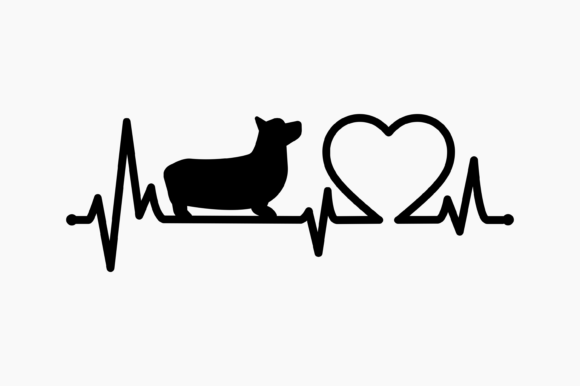
The Dog Corgi Heartbeat design balances minimalism and warmth beautifully. At its core is a stylized corgi silhouette—rounded ears, compact body, stubby tail—nested inside a subtle heartbeat line that doubles as both contour and rhythm. There’s no facial detail, no exaggerated features—just clean curves and intentional negative space. That restraint works in embroidery’s favor: fewer tiny details mean fewer stitch breaks, less thread nesting, and better scalability across fabric types.
I immediately pictured it on a linen baby blanket—small hoop, light fill stitch, pale pink thread on oatmeal fabric. Or on a black cotton tote bag for a dog-loving small shop owner: bold, legible at arm’s length, and emotionally resonant without being cutesy. It feels like a finished product, not a placeholder graphic—something customers would recognize, remember, and reach for twice.
Where It Shines (and Where to Pause)
Dog Corgi Heartbeat excels in personalization and low-complexity commercial embroidery. On sweatshirts? Yes—its compact shape fits neatly in standard 4” x 4” hoops and reads clearly even with medium-density fill stitch. On tea towels or kitchen aprons? Absolutely. The heartbeat motif subtly nods to care and daily ritual—perfect for handmade home goods. As a baby embroidery design on onesies or burp cloths? Ideal—soft edges, no sharp corners, no dense satin borders that could irritate delicate skin.
It also translates well into embroidered patches—clean outer edge, consistent line weight, and balanced proportions make it stable under heat-seal or sew-on backing. For holiday embroidery, think stocking stuffers or pet-themed ornaments: stitch it small on felt, add a loop, and it’s ready to hang. As a tote bag design or cap front motif? Use caution. On curved surfaces like caps, test the placement first—the heartbeat curve may flatten slightly depending on crown tension. And on stretchy fabric (think lightweight jersey tees), pair it with cutaway stabilizer and reduce stitch density by 10–15% to avoid puckering.
Design Notes Every Embroidery Professional Should Check
- Test on scrap first—especially if using textured fabrics like terry cloth or bouclé. The heartbeat line’s smooth flow can blur on high-pile surfaces.
- Thread color contrast matters. On dark fabric, avoid light gray or beige threads—the heartbeat line needs clarity. Navy + cream or charcoal + butter yellow read stronger than black + white here.
- Hoop size isn’t stated, but based on visual scale, assume compatibility with 3.5”–4.5” hoops. Confirm before digitizing for large-batch production.
- Small details hold up: the corgi’s ear curve and tail nub are distinct enough to survive at 2.25” width—but don’t push below 1.75” without checking stitch integrity.
- Use proper stabilizer. Lightweight tear-away works for stable wovens; for knits or thin fabrics like rayon challis, switch to medium-weight cutaway.
- Review licensing. The listing says “unlimited use” for physical products—but verify whether resale of the digital embroidery file itself is permitted. Craft business owners and Etsy sellers need clarity before bundling it into kits or templates.
How It Elevates Your Finished Product
What makes Dog Corgi Heartbeat stand out isn’t technical perfection—it’s emotional resonance delivered cleanly. Customers don’t buy embroidery files; they buy meaning, memory, identity. This design delivers that quietly. A personalized gift stitched with Dog Corgi Heartbeat feels intentional—not mass-produced, not generic. That builds trust. That justifies premium pricing for small shop products. That makes buyers tag your Instagram post because the design *feels* like theirs.
For apparel decorators, it adds versatility: same file, multiple applications—tote, tee, pillow cover, even iron-on transfer mockups. For digital product sellers, it’s strong printable mockup material: the shape renders crisply in PNG and SVG, and the heartbeat line gives natural visual hierarchy in listings. As a graphics asset, it bridges Crafts and commercial sensibility—simple enough for beginners, refined enough for seasoned makers.
A Real Project Moment: Stitching It for a Nursery Line
Last week, I used Dog Corgi Heartbeat for a client launching a gender-neutral nursery collection. We stitched it at 2.5” wide on organic cotton muslin pillow covers—light fill stitch, matte cotton thread, tear-away stabilizer. No issues. The heartbeat line stayed fluid, the corgi shape held definition, and the overall effect was tender but grounded. Parents responded strongly—not just to “cute dog,” but to the implied safety, rhythm, presence. That’s the difference between decoration and connection. That’s what makes this more than a machine embroidery design—it’s a quiet storytelling tool.
Final Thoughts for Makers Who Care About Craft
If you’re choosing embroidery files for real projects—not just testing, not just collecting—Dog Corgi Heartbeat earns its place. It’s not the most intricate applique design you’ll find. It won’t wow with 3D puff or complex layering. But it works—consistently, kindly, professionally. It respects fabric. It respects time. It respects the person stitching it and the person receiving it.
For Etsy sellers building cohesive collections, it pairs naturally with neutral palettes and organic materials. For craft fair vendors, it’s a conversation starter—“Is that your dog?” leads to story, to sale, to repeat customer. For hobbyists making personalized gifts, it’s stress-free and satisfying. And for designers curating digital embroidery file libraries, it’s a reliable anchor—simple, scalable, sincere.
Just remember: even the best design needs thoughtful execution. Test. Adjust. Respect your fabric. And always ask—does this feel like something someone would keep, not just wear?